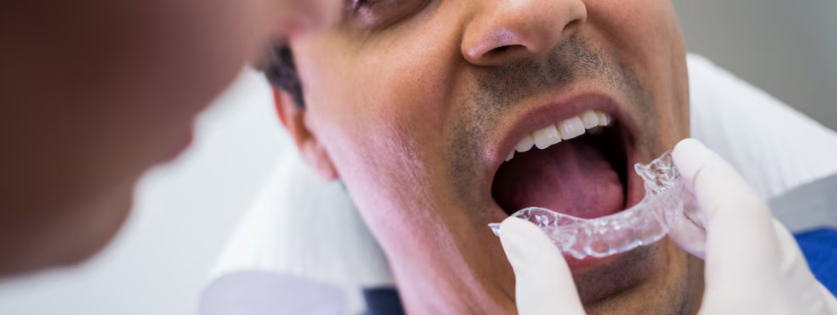
Tooth straightening with Invisalign in Finchley N12 is a modern orthodontic treatment that uses a series of custom-made, clear, removable aligners to gradually move the teeth into their correct positions without the need for fixed metal brackets or wires. It is one of the most popular and widely chosen orthodontic solutions available today, offering a discreet, comfortable, and highly effective way to achieve a straighter smile at any age. Whether you are dealing with crowded teeth, gaps, an overbite, or general misalignment, Invisalign provides a clinically proven path to the smile you want with minimal disruption to your daily life.
For patients in and around Finchley N12, expert Invisalign treatment is available close by at the Dental Clinic in Totteridge, where experienced dental professionals guide patients through every stage of their orthodontic journey with personalised care and a commitment to achieving outstanding results.
What Is Invisalign
Invisalign is a brand of clear aligner orthodontic therapy developed using advanced three-dimensional digital imaging technology. Rather than using fixed brackets and wires to move the teeth, Invisalign uses a series of precisely engineered transparent plastic trays, each one slightly different from the last, to apply gentle and controlled pressure to the teeth over time. Each aligner in the series moves the teeth a small amount closer to their final position, and patients progress through the series in sequence, typically changing to a new aligner every one to two weeks.
The aligners are made from a smooth, BPA-free medical-grade plastic material that fits snugly over the teeth and is virtually invisible when worn. They are removable, which means patients can take them out to eat, drink, brush, and floss, making Invisalign significantly more convenient and hygienic than traditional fixed braces for many patients. For those exploring Dental Care in Totteridge, the team at Totteridge Dental Studio provides comprehensive Invisalign consultations that assess your suitability for treatment and map out a clear and realistic plan for achieving your ideal smile.
The entire Invisalign treatment process is planned digitally before a single aligner is made. Using a detailed three-dimensional scan of your teeth, your dental team and the Invisalign software work together to map out the precise movement of each tooth from its current position to its final corrected position. This allows patients to see a virtual simulation of their expected results before treatment even begins. Patients looking for Invisalign treatment in Finchley N12 will find that Totteridge Dental Studio combines the latest digital technology with personalised clinical expertise to deliver results that are both predictable and impressive.
Signs That You May Need Tooth Straightening with Invisalign
Invisalign is suitable for a wide range of orthodontic concerns, from mild cosmetic irregularities to more complex functional misalignment issues. You may be a good candidate for Invisalign if you are experiencing or noticing any of the following:
- Crowded teeth where there is not enough space in the jaw for all the teeth to sit in their correct positions
- Gaps or spaces between teeth, particularly between the front teeth
- An overbite where the upper front teeth overlap the lower front teeth excessively
- An underbite where the lower teeth sit in front of the upper teeth when the mouth is closed
- A crossbite where some upper teeth sit inside the lower teeth rather than outside
- An open bite where the upper and lower teeth do not meet properly when the mouth is closed
- General misalignment or crooked teeth that affect the appearance and confidence of your smile
- Difficulty cleaning between teeth effectively due to crowding, leading to repeated gum problems or tooth decay
As a highly regarded Dentist in Totteridge, the team at Totteridge Dental Studio will carry out a thorough clinical assessment to determine whether Invisalign is the most appropriate orthodontic solution for your specific concerns or whether an alternative treatment would better address your needs.
Step-by-Step: What to Expect During Invisalign Treatment
Understanding the complete Invisalign process from your first consultation to the completion of your treatment helps you know what to expect at every stage and feel fully prepared and confident going into your orthodontic journey.
Step 1: Initial Consultation and Smile Assessment
Your Invisalign journey begins with a detailed consultation during which your dental team will examine your teeth, assess your bite, review your dental and medical history, and listen carefully to your concerns and smile goals. Photographs, X-rays, and a three-dimensional digital scan of your teeth will typically be taken to support the planning process. This information is used to determine whether you are a suitable candidate for Invisalign and to begin mapping out your personalised treatment plan.
Totteridge Dental Studio is one of the best dental clinics in Totteridge and provides expert Invisalign consultations for patients from Finchley N12 and across North London. The studio is located at 59 Totteridge Ln, London N20 0HD, United Kingdom. You can book a consultation by calling +44 20 8445 5024 or by emailing info@totteridgedental.co.uk.
Step 2: Digital Treatment Planning and ClinCheck Simulation
Once your suitability for Invisalign has been confirmed, your dental team will use Invisalign’s proprietary ClinCheck software to create a detailed digital model of your treatment. This model maps out the precise movement of each tooth at every stage of treatment and generates a virtual simulation showing you exactly how your smile will look at the end of the process. You will be able to review this simulation during your appointment and discuss any adjustments to the planned outcome before the aligners are manufactured.
Step 3: Fabrication of Your Custom Aligners
Once the treatment plan has been approved, your unique set of aligners is custom-fabricated using the digital specifications created during the planning stage. Each aligner in the series is designed to move specific teeth by a very small and precisely calculated amount, building progressively toward the final corrected position over the course of treatment.
Step 4: Fitting Your First Aligners and Placing Attachments
When your aligners are ready, you will return to the clinic to receive your first set and to have any necessary attachments placed. Attachments are small tooth-coloured composite bumps bonded to specific teeth that help the aligners grip the teeth more effectively when more complex movements are required. Your dental team will show you how to insert and remove your aligners correctly and will provide full guidance on how to care for them and maintain your oral hygiene during treatment.
Step 5: Wearing Your Aligners and Progressing Through the Series
For Invisalign to work effectively, the aligners must be worn for a minimum of twenty to twenty-two hours per day. They should only be removed for eating, drinking anything other than plain water, brushing, and flossing. Patients progress through their series of aligners by changing to the next tray in the sequence approximately every one to two weeks, as directed by their dental team.
Step 6: Regular Progress Appointments
Throughout your treatment, you will attend regular check-up appointments with your dental team, typically every six to eight weeks. These appointments allow your dental team to monitor the progress of your tooth movement, ensure the treatment is proceeding as planned, and provide you with your next sets of aligners. Any adjustments to the treatment plan that become necessary during the course of treatment will also be made at these appointments.
Step 7: Completion of Active Treatment and Retainer Fitting
Once all aligners in the series have been worn and your teeth have reached their final corrected positions, your active treatment is complete. At this stage, your dental team will take new records and assess the outcome. Retainers will be provided to hold the teeth in their new positions and prevent them from gradually drifting back over time. Wearing your retainers as directed by your dental team is one of the most important parts of ensuring your Invisalign results last for life.
Invisalign vs Other Orthodontic Options
Patients considering tooth straightening often want to understand how Invisalign compares to the other orthodontic treatments available to them.
Invisalign vs Traditional Metal Braces
Traditional metal braces consist of brackets bonded to the teeth and connected by wires that are periodically tightened to move the teeth. They are highly effective for complex orthodontic cases and have a long track record of successful outcomes. However, they are visible, can cause discomfort from the brackets and wires, make oral hygiene more difficult, and restrict certain foods. Invisalign aligners are virtually invisible, removable, and generally more comfortable for most patients, making them a highly preferred option for adults and teenagers who want a discreet orthodontic solution.
Invisalign vs Ceramic Braces
Ceramic braces work in the same way as metal braces but use tooth-coloured or clear brackets that are less noticeable. They are more aesthetically pleasing than metal braces but are still fixed to the teeth and carry the same limitations in terms of dietary restrictions and oral hygiene challenges. Invisalign remains more discreet, more comfortable, and more convenient for daily life than ceramic braces for most patients.
Invisalign vs Fixed Lingual Braces
Lingual braces are fixed to the back surfaces of the teeth, making them completely invisible from the front. They are an effective option for patients who want invisible fixed orthodontic treatment. However, they can be difficult to adjust to in terms of speech and tongue comfort, and they are typically among the more costly orthodontic options. Invisalign offers comparable discretion for most patients with greater comfort and the added flexibility of being removable.
How Long Does Invisalign Treatment Take
The duration of Invisalign treatment varies depending on the complexity of the orthodontic concerns being addressed. Mild cases requiring only minor tooth movement may be completed in as few as three to six months. Moderate cases involving more significant crowding, spacing, or bite correction typically take between twelve and eighteen months. More complex cases may require treatment of up to twenty-four months or longer.
Your dental team will give you a realistic estimate of the expected treatment duration during your consultation and will map this out in your ClinCheck digital simulation so you have a clear picture of the journey ahead before you begin.
Common Patient Mistakes to Avoid
Being aware of the most frequent errors that patients make during Invisalign treatment helps you protect your results and avoid extending the length of your treatment unnecessarily.
Not wearing aligners for the required hours is the single most common and impactful mistake Invisalign patients make. Wearing the aligners for fewer than twenty to twenty-two hours per day slows tooth movement significantly, extends the treatment timeline, and can result in the aligners no longer fitting correctly as treatment progresses. Consistency in wear is the most important factor in achieving the results your treatment is designed to deliver.
Eating or drinking with aligners in is a mistake that can stain the clear plastic, trap food and bacteria against the teeth, and weaken the structure of the aligner. Always remove your aligners before eating or drinking anything other than plain water, and brush your teeth before replacing them.
Forgetting to clean the aligners regularly allows bacteria and plaque to build up on the trays, leading to unpleasant odour, discolouration, and increased risk of dental decay during treatment. Clean your aligners gently every day using a soft toothbrush and lukewarm water or the Invisalign cleaning crystals recommended by your dental team.
Skipping progress appointments means that any issues with tooth movement go undetected for longer than necessary and can complicate the treatment plan. Attending every scheduled check-up appointment ensures your treatment stays on track and that any refinements needed are identified and addressed promptly.
Not wearing retainers after treatment is one of the most common causes of orthodontic relapse. Teeth naturally tend to drift back toward their original positions after active treatment ends. Wearing your retainers consistently, as directed by your dental team, is the only way to preserve the results of your Invisalign treatment permanently.
Prevention and Maintenance Tips During and After Invisalign
Supporting your treatment progress and protecting your oral health throughout your Invisalign journey and beyond requires consistent daily care and responsible habits.
Brush your teeth thoroughly after every meal before replacing your aligners to avoid trapping food particles and bacteria against the tooth surfaces. Use a soft-bristled toothbrush and a fluoride toothpaste and pay careful attention to cleaning along the gumline and around any attachments bonded to the teeth.
Store your aligners in their protective case whenever they are not in your mouth. Leaving them exposed on a table or wrapped in tissue increases the risk of them being accidentally lost or damaged. Always have your current set of aligners and your next set accessible when you are away from home.
Carry a small hygiene kit including a toothbrush, toothpaste, and aligner case when you are out so that you can maintain your routine regardless of your schedule. This simple preparation makes it significantly easier to stay consistent with both wear time and oral hygiene throughout treatment.
After your active treatment is complete, wear your retainers exactly as instructed by your dental team. For most patients this means full-time wear for an initial period followed by night-time wear indefinitely. Retainer compliance is the single most important factor in ensuring your straightened smile lasts a lifetime.
Attend regular dental check-ups and hygiene appointments throughout and after your treatment. Routine professional cleaning removes plaque and calculus that accumulates during treatment and supports the long-term health of the teeth and gums that your new smile depends upon.
Frequently Asked Questions
- Is Invisalign suitable for adults and teenagers?
Yes. Invisalign offers treatment systems specifically designed for both adults and teenagers. Invisalign Teen includes features such as compliance indicators, which are small blue dots on the aligners that fade with wear to help monitor usage, and additional replacement aligners in case of loss or damage. Adults of any age can benefit from Invisalign treatment provided their teeth and gums are in good health. Your dental team will assess your suitability during your consultation.
- Does Invisalign hurt?
Invisalign treatment involves gentle and controlled tooth movement, and most patients experience some degree of mild pressure or tenderness when they first begin wearing a new aligner in the series. This sensation is a normal sign that the aligners are working and typically subsides within a day or two of changing to a new tray. Invisalign is generally considered more comfortable than traditional fixed braces as there are no brackets or wires to cause irritation to the soft tissues of the mouth.
- Can I eat normally during Invisalign treatment?
Yes. Because Invisalign aligners are fully removable, you can eat and drink whatever you like during treatment. Simply remove your aligners before eating, enjoy your meal or snack without restriction, brush your teeth before replacing the aligners, and continue with your day. This is one of the most significant lifestyle advantages of Invisalign over fixed braces, which prohibit certain foods that could damage the brackets or wires.
- How often do I need to visit the clinic during Invisalign treatment?
Most patients attend progress appointments every six to eight weeks throughout their Invisalign treatment. These visits allow your dental team to monitor tooth movement, assess the fit of your current aligners, and provide you with your next sets of trays. The frequency of appointments is significantly lower than with traditional braces, which typically require more frequent adjustments. Your dental team will confirm the expected appointment schedule during your consultation.
- What happens if I lose or damage an aligner?
If you lose or damage an aligner, contact your dental clinic as soon as possible. In most cases, your dental team will advise you to move on to the next aligner in the series if you are close to the time when you would have changed trays anyway, or to go back to the previous aligner to maintain tooth position while a replacement is arranged. It is a good idea to always keep your previous set of aligners as a backup in case of loss or damage to your current set.
Conclusion
Tooth straightening with Invisalign in Finchley N12 offers a modern, comfortable, and highly discreet way to achieve a straighter and healthier smile without the limitations of traditional fixed braces. With a personalised treatment plan, consistent aligner wear, and the guidance of a skilled dental team, Invisalign can deliver transformative results that last a lifetime. Totteridge Dental Studio, located at 59 Totteridge Ln, London N20 0HD, United Kingdom, is a trusted provider of Invisalign treatment for patients across Finchley N12 and North London, offering expert care from consultation through to completion with a genuine commitment to helping every patient achieve the smile they deserve.